Aircraft stability
Stability is the aircraft's tendency to return to trimmed flight after a disturbance.
- Static stability: the initial tendency to return to trim.
- Dynamic stability: what the motion does over time: damped (settles down), oscillating, or divergent (gets worse).
(The static/dynamic split is basic aerodynamics; TP 1102 defines stability as the tendency to return to trim and covers the three axes, but does not use these two terms.)
Each axis gets its stability from a different place:
| Stability | Motion | Comes from |
|---|---|---|
| Longitudinal | pitch | horizontal stabilizer + CG position |
| Lateral | roll | wing dihedral |
| Directional | yaw | vertical fin |
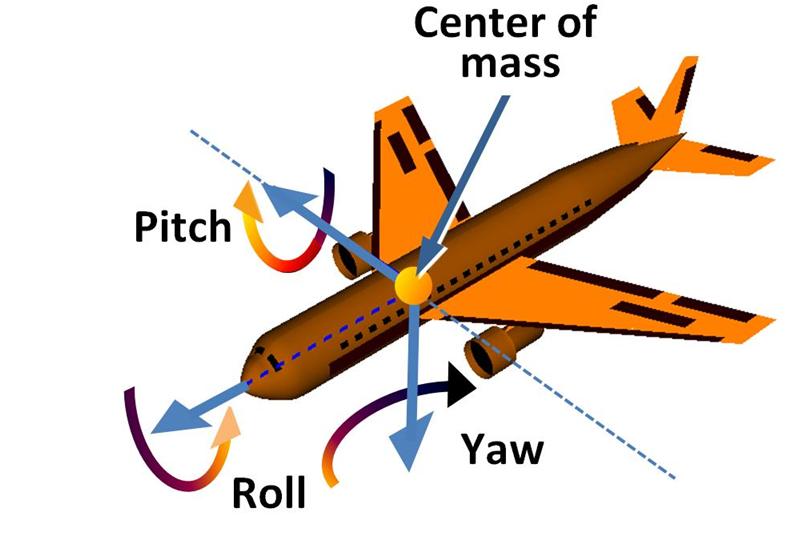
CG position sets longitudinal stability:
- Forward CG: more stable, but higher stall speed and more elevator needed to flare (the tail carries more download).
- Aft CG: less stable, lighter in pitch.
Trap: thinking a forward CG lowers the stall speed. It raises it.
References
- TP 1102 (Flight Training Manual)